REHABILITATION
Innovative, individualized rehabilitation for equine, canine and exotic patients.
EQUINE REHABILITATION
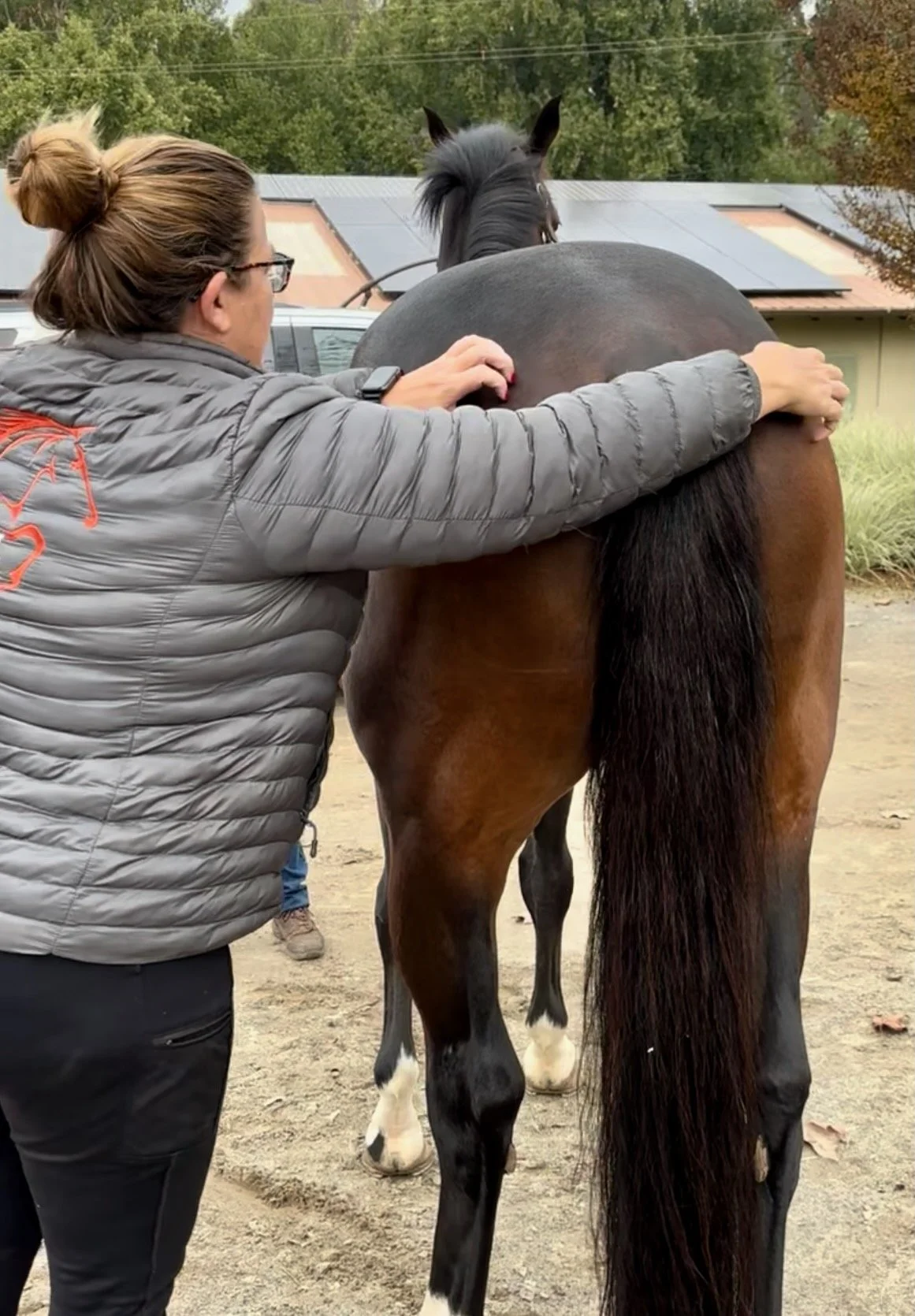
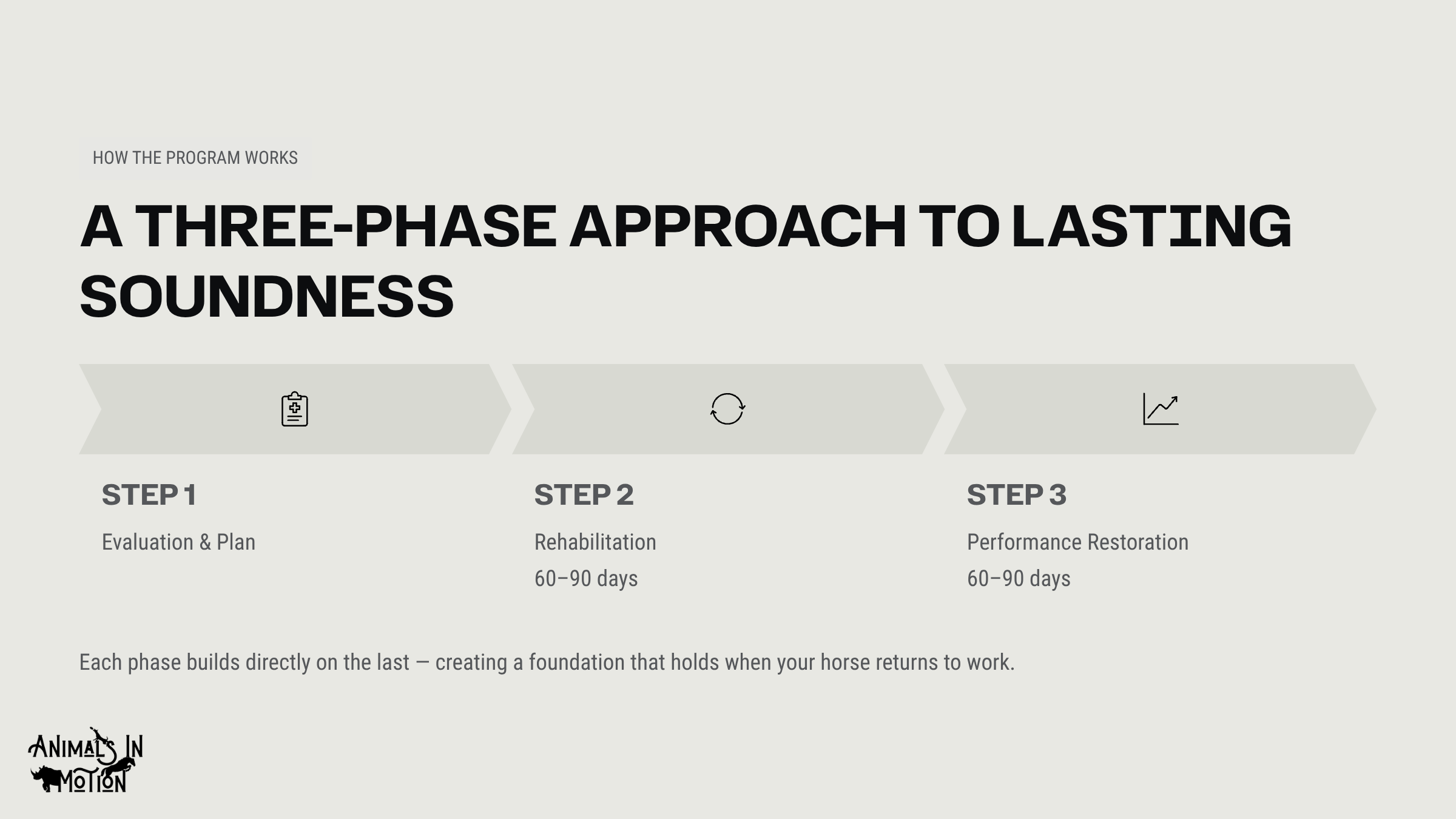
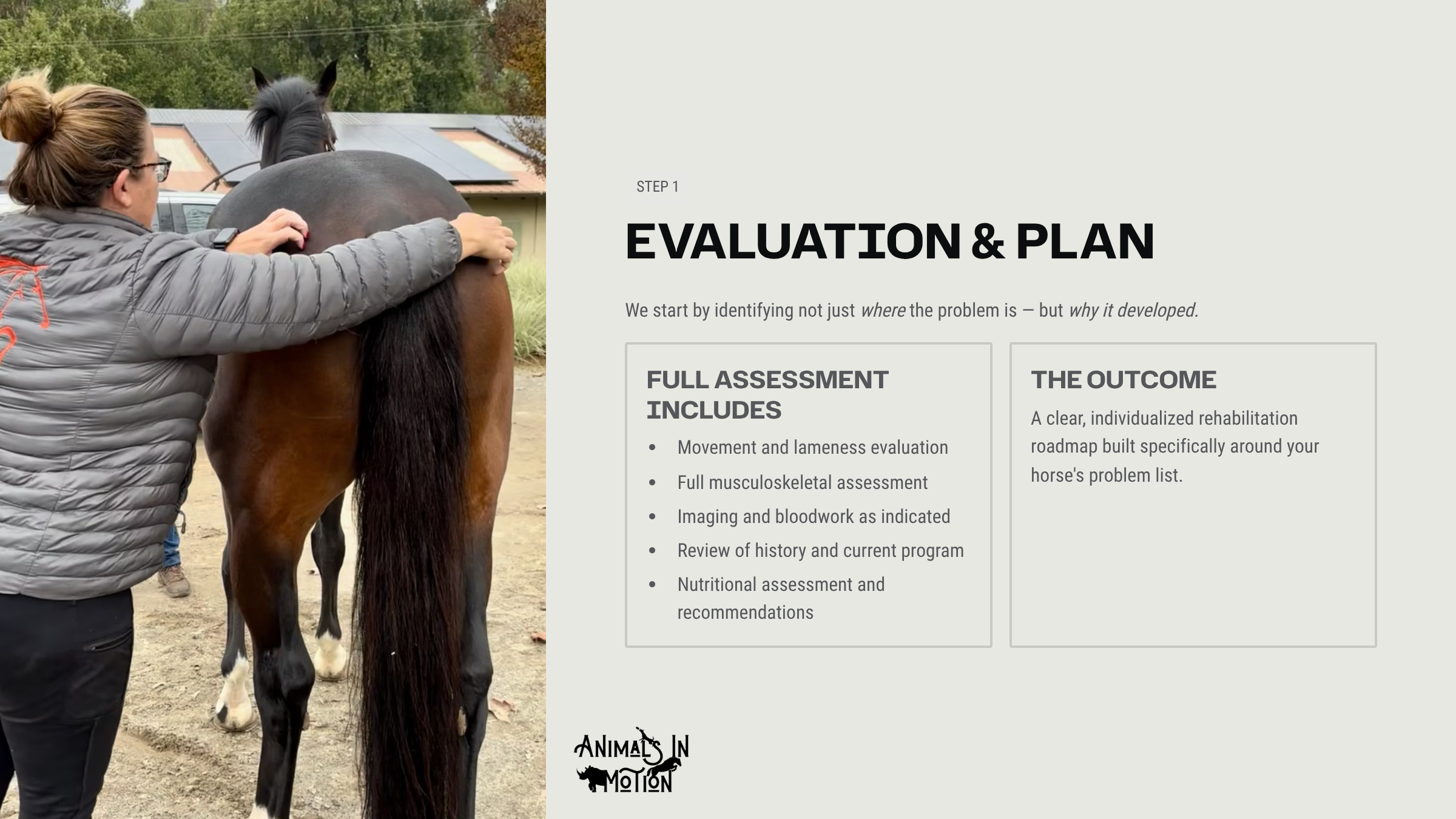
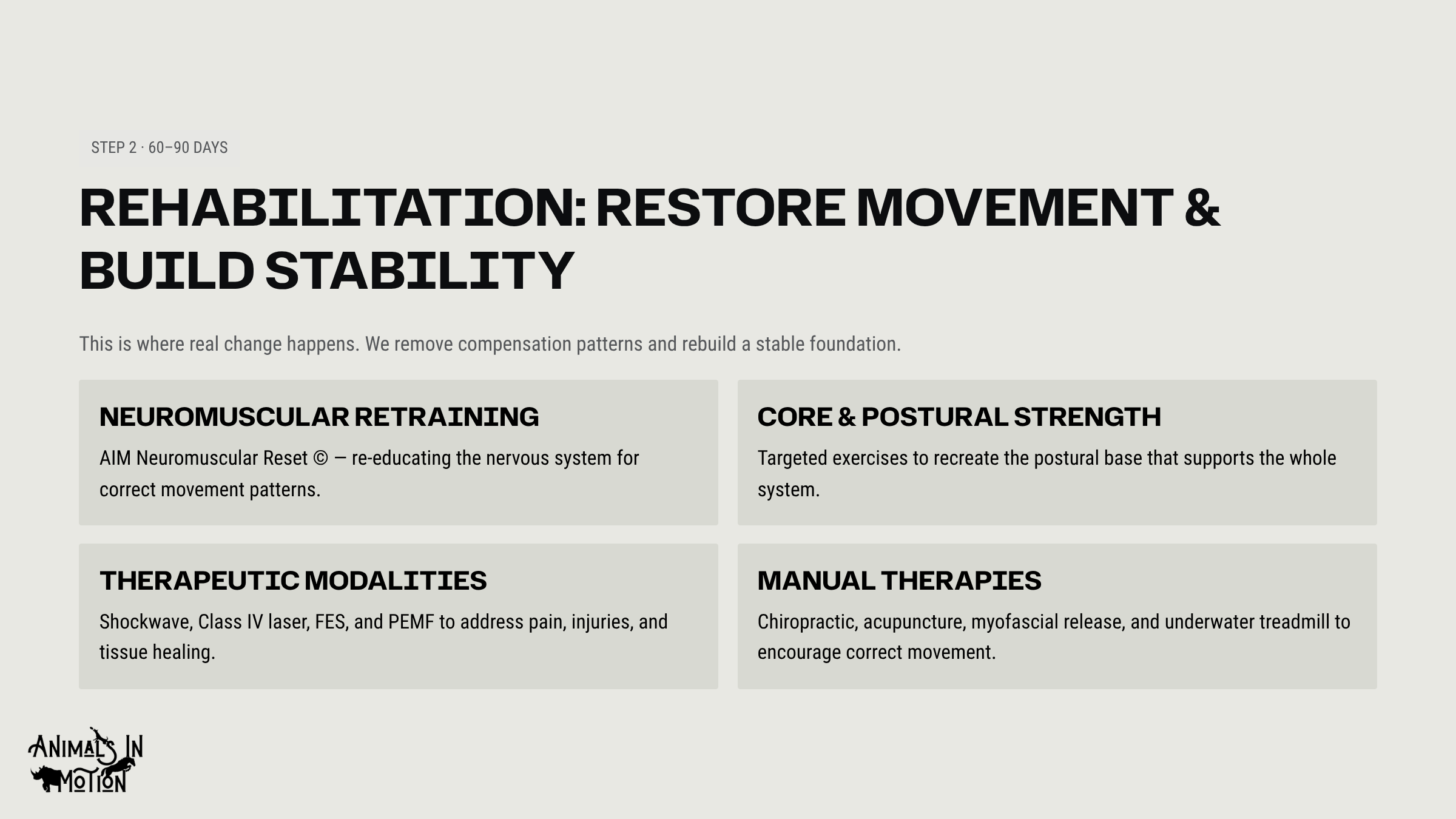
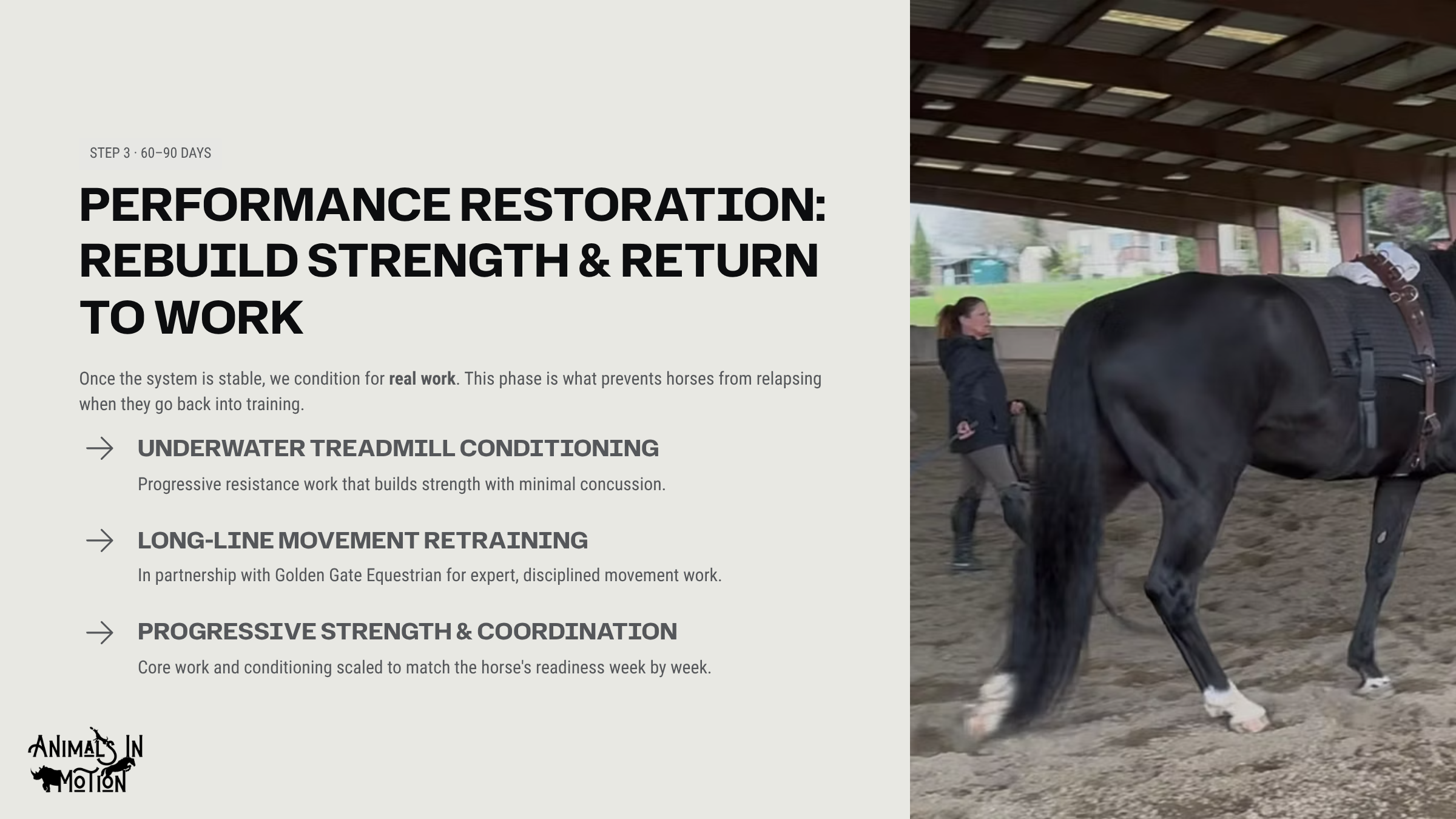
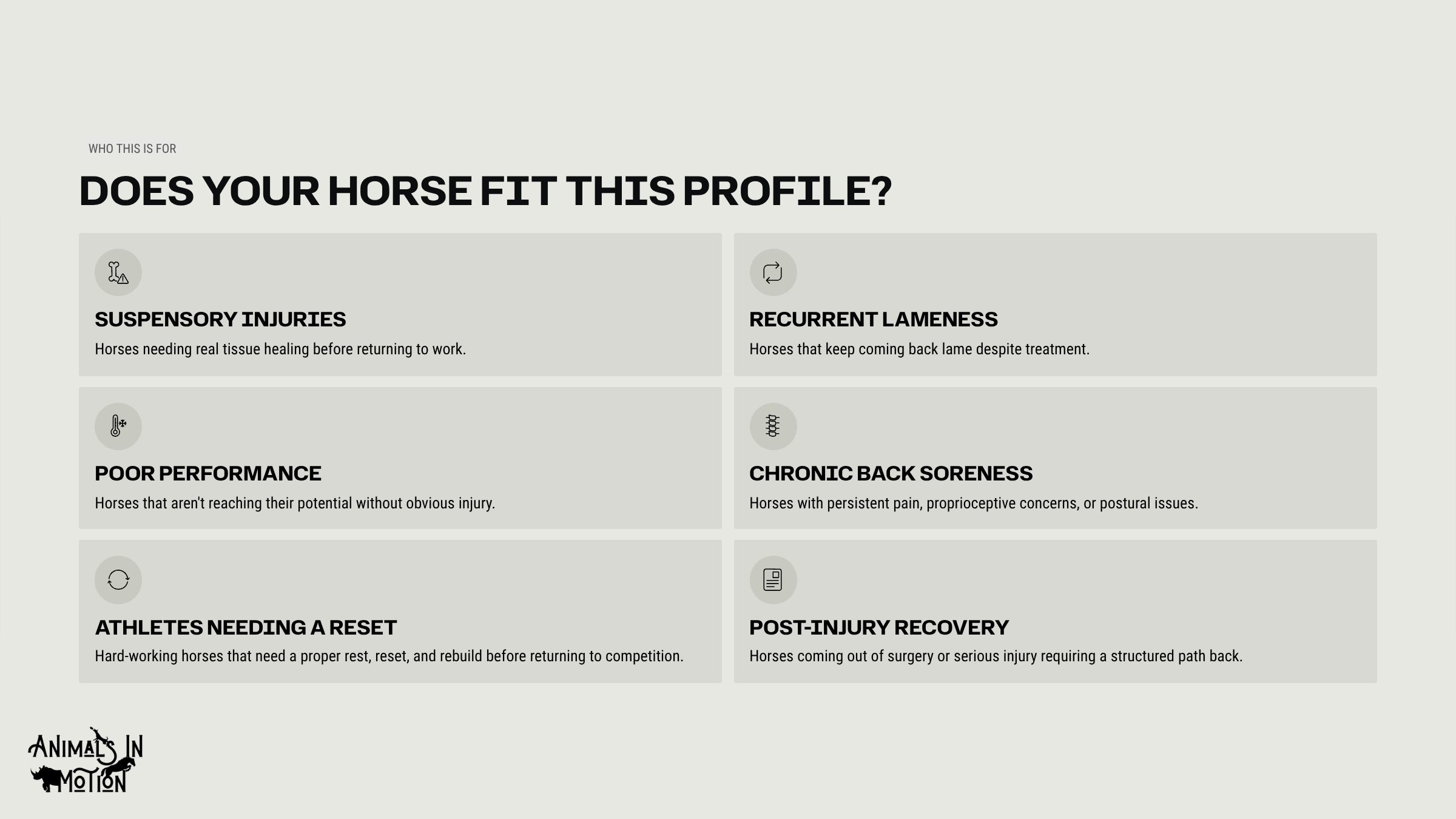
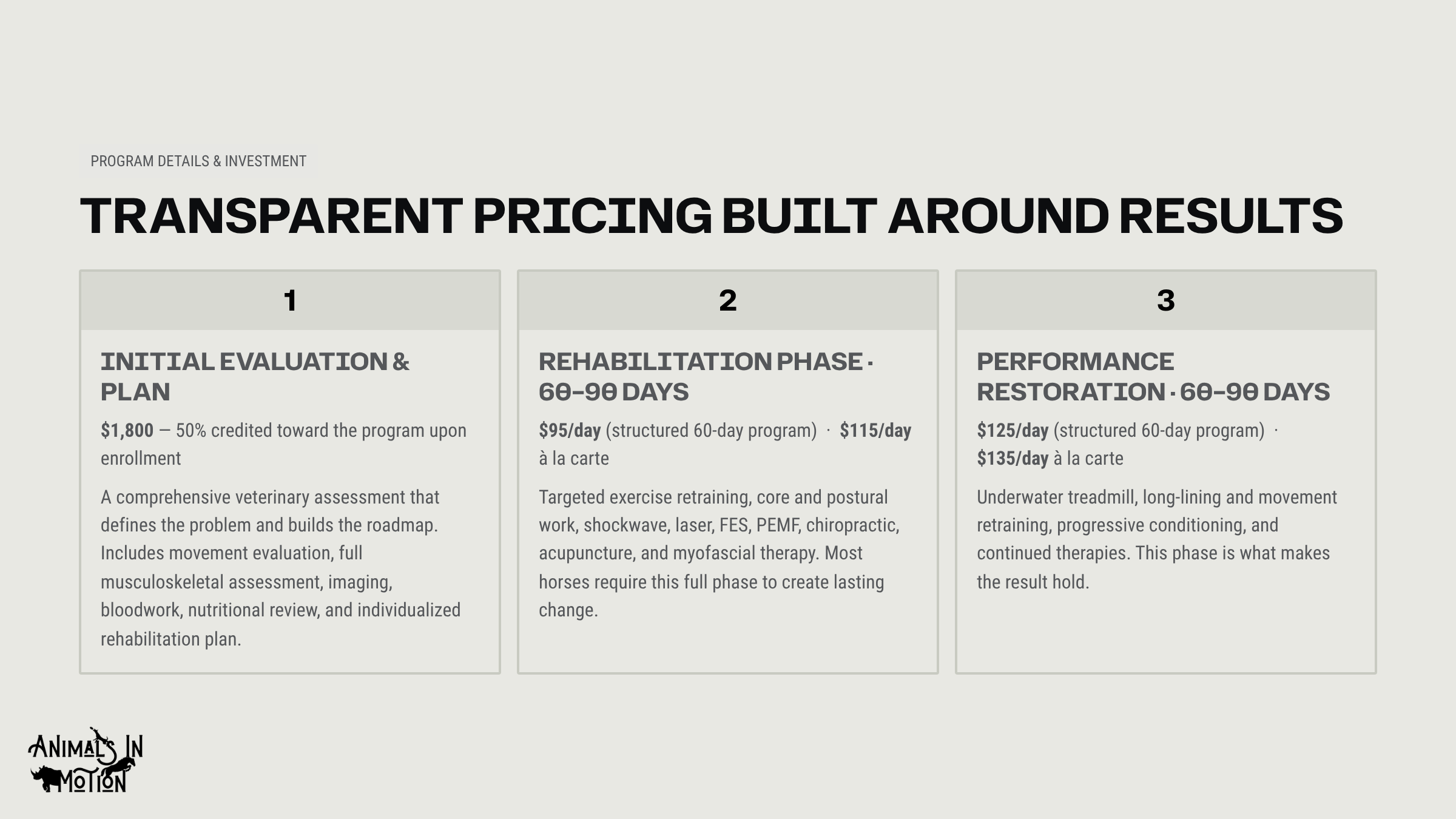
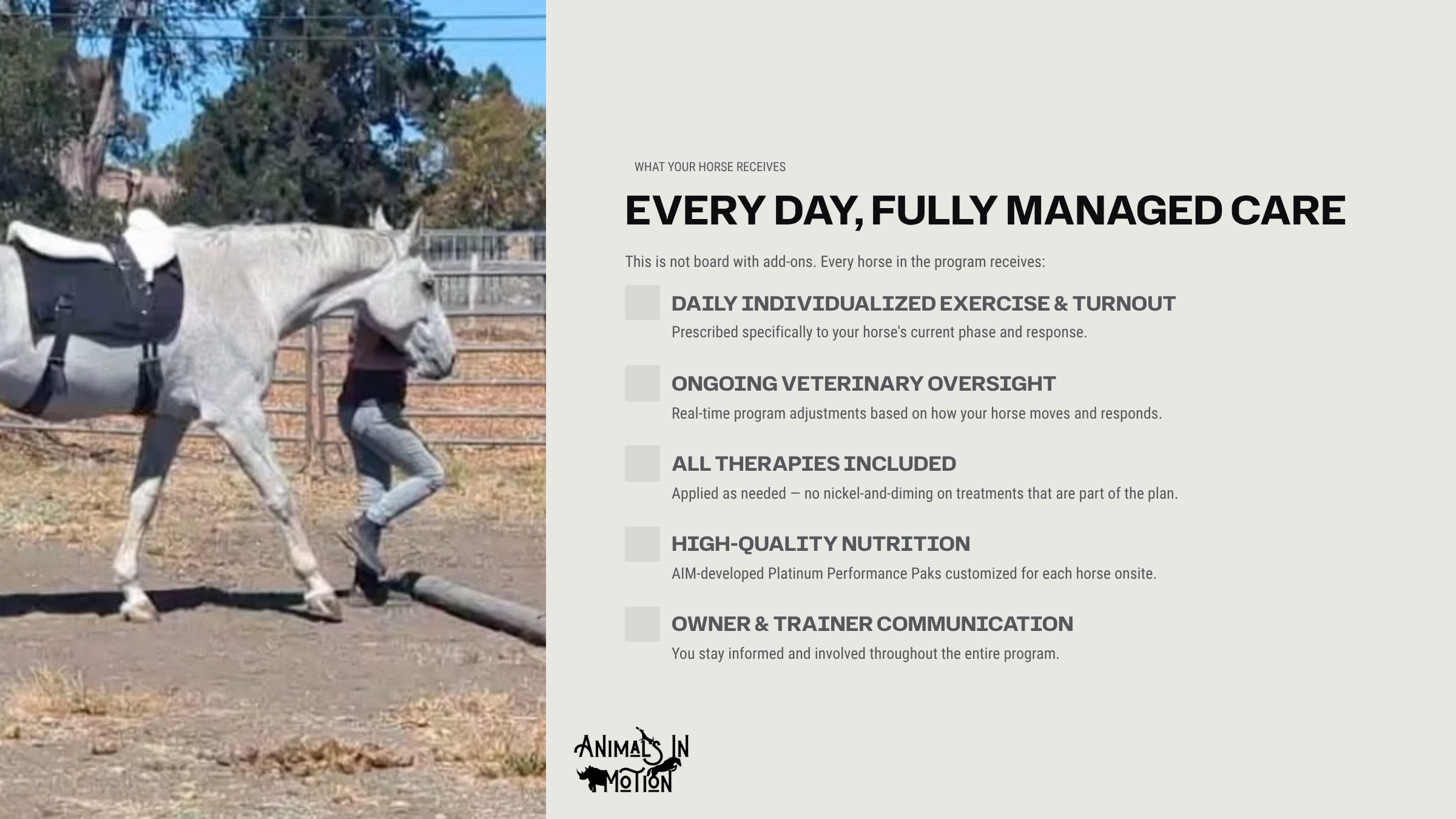
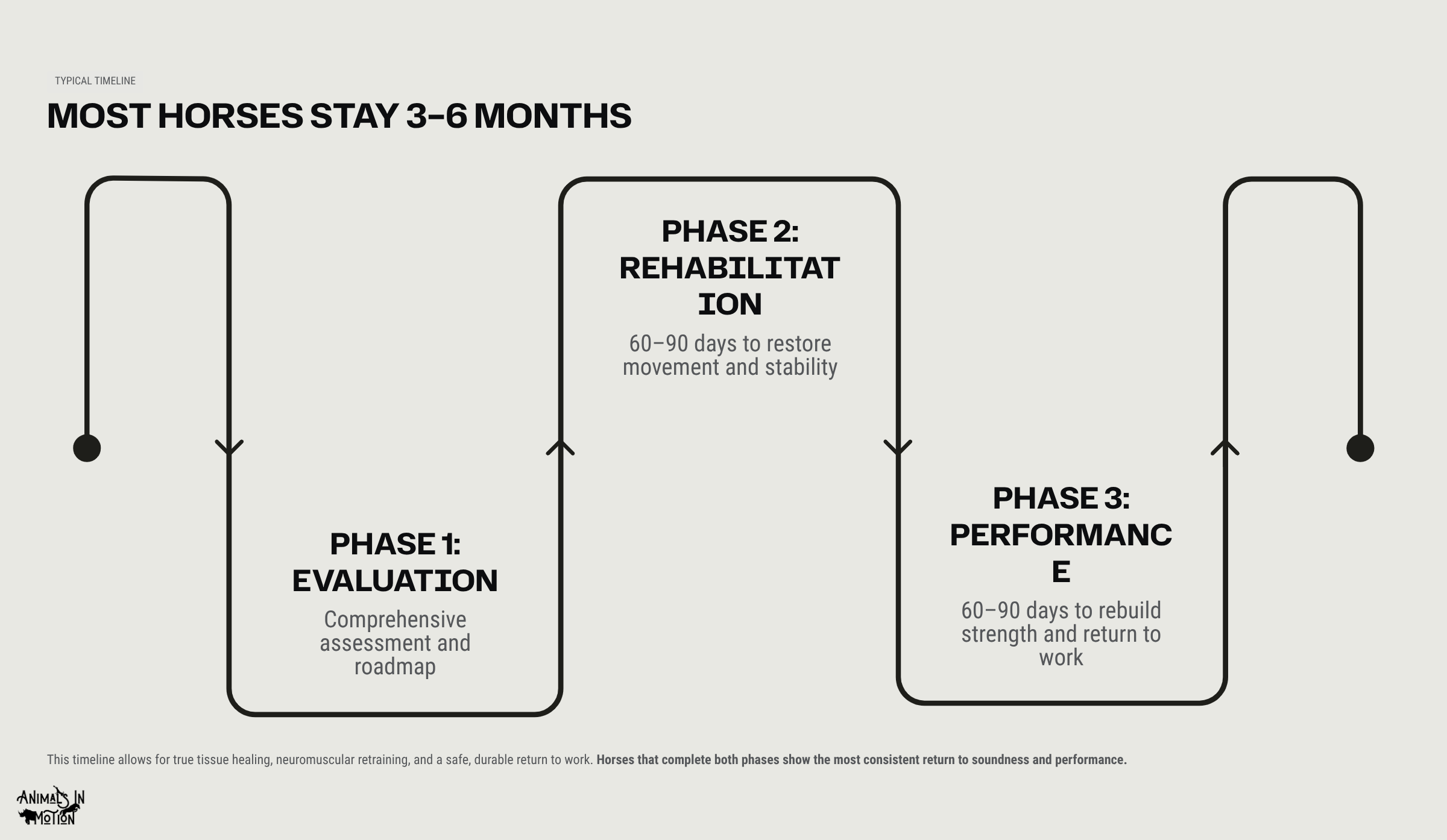
Onsite equine rehabilitation at Animals In Motion is designed and overseen by Dr. Carrie Schlachter, with each program developed in response to the individual horse rather than a predefined pathway. Horses are accepted based on clinical need and suitability for a structured rehabilitation environment, where progression is guided by movement quality, response to load, and mental state—not timelines or checklists.
Rehabilitation plans are adjusted continuously, integrating biomechanics, behavior, and use expectations to support long-term soundness and confidence in movement. Daily rehabilitation is carried out by a certified rehabilitation team, with program design, progression, and decision-making directed by Dr. Schlachter to ensure consistency, intent, and accountability throughout the process.
Onsite rehabilitation emphasizes:
Individualized, case-specific programming
Progressive loading guided by response and movement quality
Attention to both mental and physical balance
Daily execution supported by a certified rehabilitation team under AIM oversight
📄 View Equine Rehabilitation Programs (PDF)
Onsite equine rehabilitation is delivered through Animals In Motion in partnership with Melody Oak Farmand Golden Gate Equestrian, with all rehabilitation programming, progression, and clinical oversight directed by Dr. Carrie Schlachter.
CANINE REHABILITATION
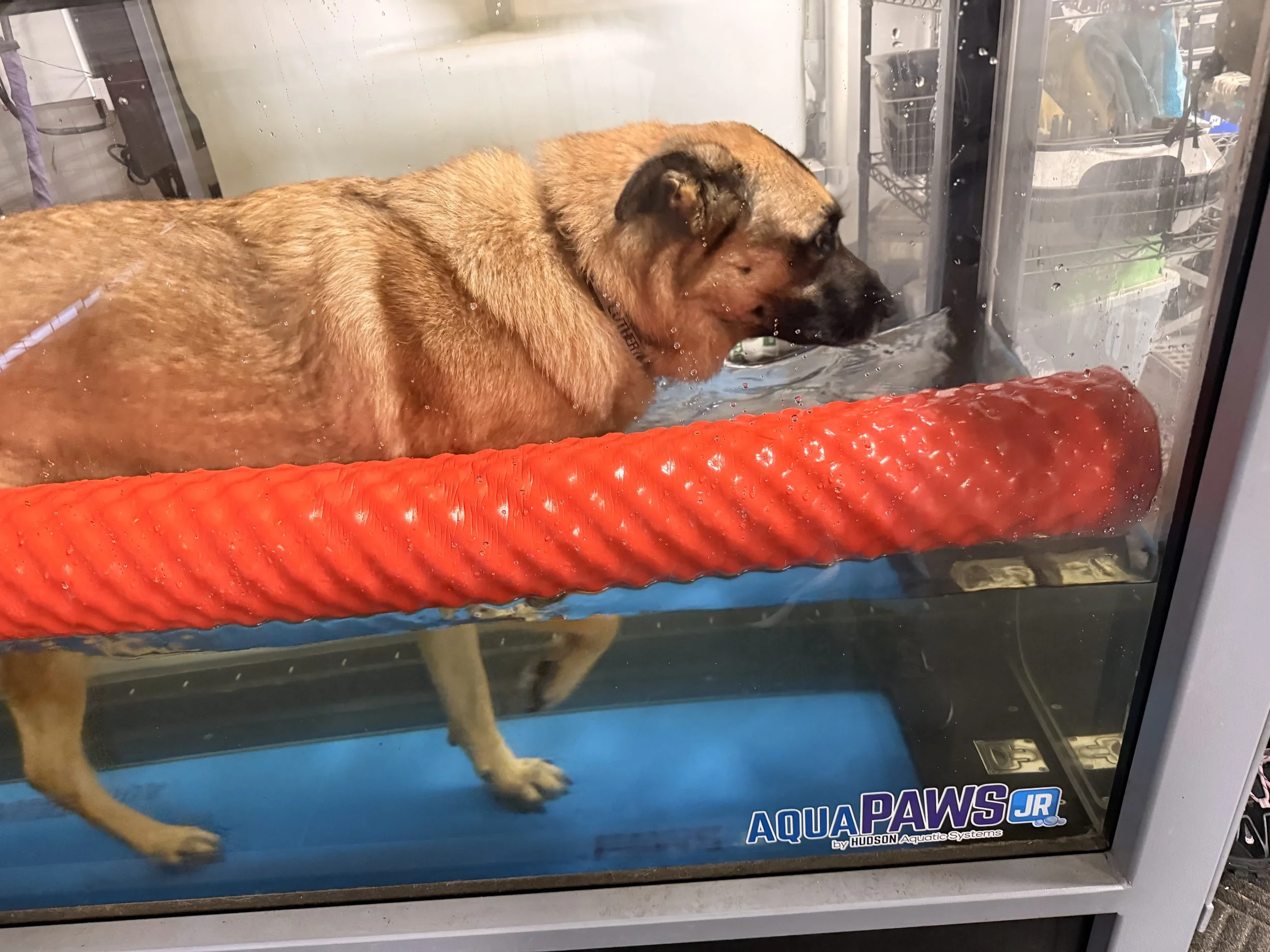
Canine rehabilitation at Animals In Motion applies the same biomechanical and behavioral principles used in equine rehabilitation, adapted thoughtfully to the individual dog. Programs are developed with attention to how each dog moves, compensates, and responds to load, environment, and expectation—whether supporting return to performance, recovery from injury or surgery, or maintaining comfort and mobility in aging dogs.
Rehabilitation plans are tailored without simplification, emphasizing appropriate progression, movement quality, and mental engagement. As with all rehabilitation services at AIM, canine programs are designed and overseen by Dr. Carrie Schlachter, ensuring consistency of standards and intent across species.
Rehabilitation principles don’t change — application does.
Canine rehabilitation supports:
Sport and working dogs
Post-operative and injury recovery
Aging dogs maintaining comfort and mobility
CONSULTATIONS
Rehabilitation consultations are done by Dr. Carrie Schlachter and are designed to provide experienced, case-specific guidance for horses that may or may not require onsite care. Drawing on extensive experience in lameness, sports medicine, rehabilitation, herd health, and behavior, each consultation begins with a thorough review of case history, lameness context, and movement assessment.
From this foundation, a rehabilitation plan is developed with clear intent—addressing how the individual horse moves, compensates, and responds physically and mentally to its environment and workload. Recommendations emphasize thoughtful progression over fixed timelines or protocols, with the goal of supporting durable soundness and long-term well-being.
Consultations emphasize:
Whole-horse evaluation within the context of use and management
Clear goals and appropriate progression
Collaboration with owners, trainers, and veterinarians
Not every horse needs to live onsite to benefit from our rehabilitation approach.
EXOTIC REHABILITATION
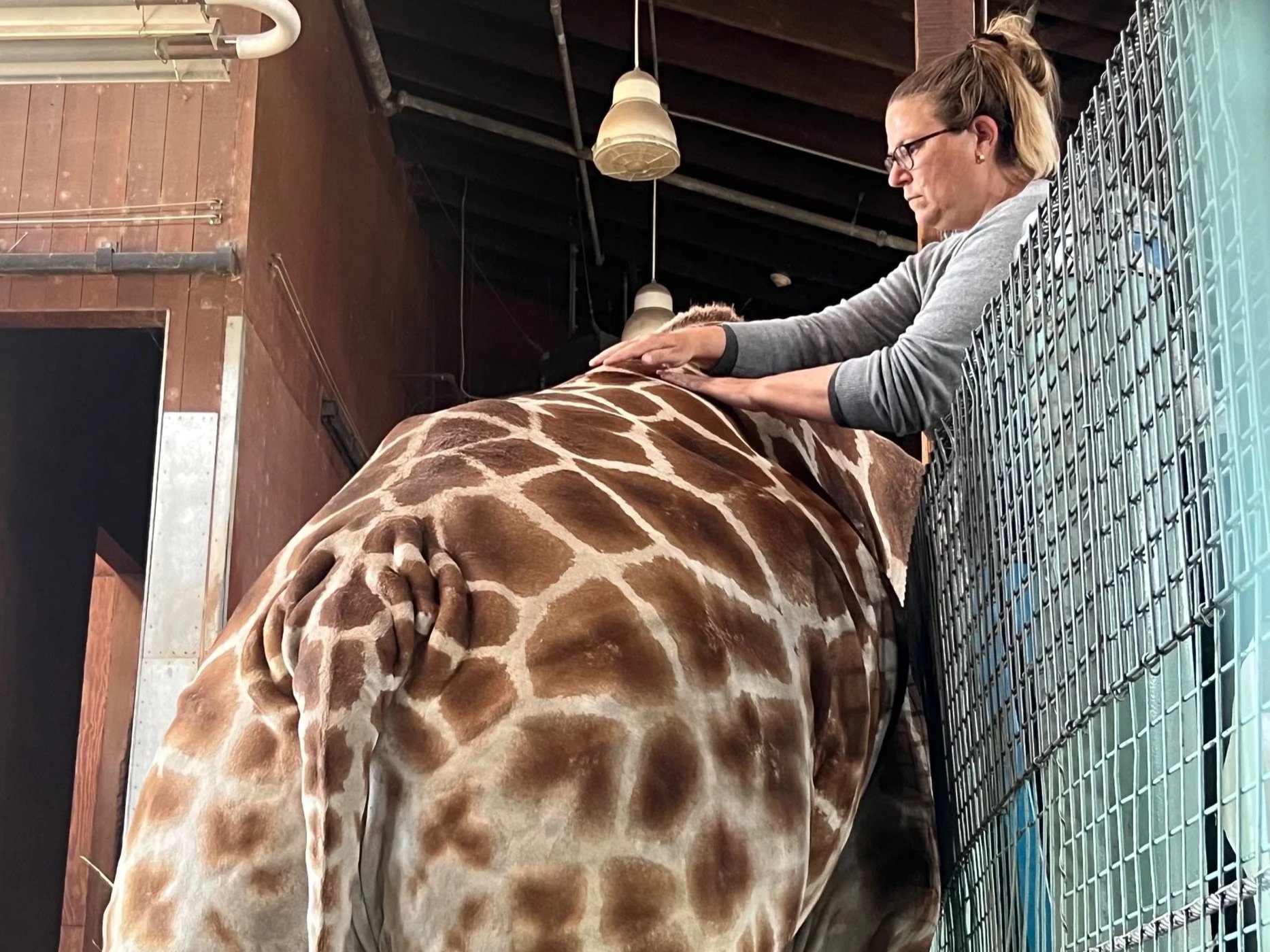
Animals In Motion provides rehabilitation support for select exotic species on a limited, case-by-case basis. These cases are approached with careful consideration of species-specific biomechanics, behavior, and welfare needs, and are undertaken only when appropriate support and oversight can be ensured.
Exotic rehabilitation services are consultation-driven and integrated within the same principles that guide all AIM rehabilitation work, with program design and clinical oversight provided by Dr. Carrie Schlachter.